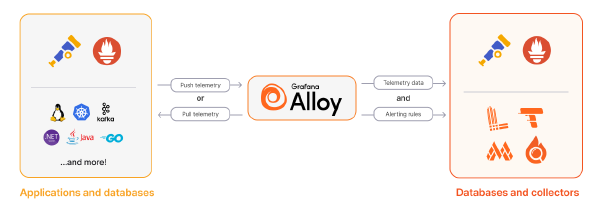
Until now I used vector.dev as my workhorse to collect logs and metrics from systems and deliver them to SigLens. In the mean time there is a new kid on the block: Grafana Alloy. In this article I will show you how you connect Grafana Alloy to your SigLens instance.
In a recent project I tried to automate the phishing handling process. So if an email is reported as suspicious from end user the email is sent to a sandbox for a verdict and guess what: The sandbox mostly comes to the conclusion that the email is safe. But: IT IS NOT!
In the last article we found out that KQL transformation at ingestion time is not available for Auxiliary Logs. But in real cases you want to have the ability to send selective log lines to Analytics while sending the rest to Auxiliary. In this article we will discover the possibilities.
In real world scenarios you have a data source with field names which are not identical to those in your table. Beside of renaming the fields in your agent which sending logs also Data Collection Rules provide the ability to map fields with transformkql.
Microsoft provides a new type of Log Analytics tables called Auxiliary Logs. Currently this is in Public Preview and I did some lab testing which I documented in this blog post.
Some days ago I discovered SigLens the first time and wrote a blog post about feeding logs into it with the help of Vector.dev. SigLens does not only provide fast log management - no; it also supports metrics. In this article I show you how to setup ingestion of metrics from Prometheus Node Exporters.
Microsoft provides an Enterprise Attack Surface Management (EASM) tool. In this blog series I want to disover the tool and the possibilities. This is part 3 of this series and covers my conclusions.
A new star is born and my new personal favorite if you have to deal with logs: The Log Management solution from https://siglens.com/ together with https://vector.dev/ for log ingestion. This article describes the basic setup and the state of the project per may 2024.
Microsoft provides an Enterprise Attack Surface Management (EASM) tool. In this blog series I want to disover the tool and the possibilities. This is part 2 of this series and covers tuning..
Microsoft provides an Enterprise Attack Surface Management (EASM) tool. In this blog series I want to disover the tool and the possibilities. This is part 1 of an upcoming series.
Ubuntu provides several methods to automatically install Ubuntu on systems. This article will describe the method with an Autoinstall file to automatically make the base setup of the system.
Introduction When setting up VMs based on Ubuntu, I often go through the same setup steps. Naturally, I do this with Ansible. However, there’s a bit of a chicken-and-egg scenario: to manage the system with Ansible, a defined user must exist, along with an SSH key.
Azure Batch is quite powerful tool if you want to scale compute intensive tasks in your environment due it lets you manage scaled workload in Azure. This article will present counter measure to reduce the risk of misuse.
Microsoft provides Windows 11 Developer VMs for several Hypervisors like VMware, Hyper-V and more - but not for Proxmox. This article shows how to automate the process of deploying Windwos 11 Developer VM to Proxmox.
If using Microsoft Defender for Office 365 (MDO) as a Security Analyst and want to mitigate stuff (eg. add a domain to the Tenant Level Allow/Block list) you have an issue with the current role model Microsoft provides.
If using Microsoft Defender for Endpoint (MDE) often you need to tag devices according some rules. In the past this was a manual task or you automated it by using the API. Now Microsoft provides a way to tag systems automatically according rules.
In previous post I wrote about several possibilities to automate tasks in Azure. In this post I will show you an additional possibility to automate tasks in a cloud native environment with the help of Automation Account.
In another post I already wrote about managed identities and using API. There I also showed how to adapt the required permissions. In this post you will see how to set up required permissions for Microsoft Defender for Endpoint (internally called WindowsDefenderATP).
In the first part of this serie we checked the basics of the Graph API. Now in this part we will use Logic App to query the API. This opens new way to automate tasks.
Nextcloud is a file sharing platform like Sharepoint. Providing SSO for this application for your Azure Active Directory users is easy - especially if you know which SAML properties you have to setup on both ends, Nextcloud and AAD. This article shows you how to do it.
Oracle is a nice cloud provider which provides some resources for free. That’s perfect if you want to experiment with some web services. But unfortunatly accessing them is not an easy task if you are a beginner in this environment. I will show you what you have to do to get access to your VM (beside of SSH).